Quick Answer
prefab house costs between $50 and $250 per square foot in the United States in 2026, with most buyers paying $80 to $175 per square foot for a fully installed home. A 1,500-square-foot prefab home typically runs $120,000 to $260,000 including site work, foundation, delivery, and finishing. Manufactured (HUD-code) homes sit at the lower end of that range, while custom modular homes with premium finishes land at the top.
This guide breaks down prefab home pricing by type, size, region, and finish level, and shows you exactly what the “base price” you see advertised does and doesn’t include.
What Counts as a “Prefab” House?
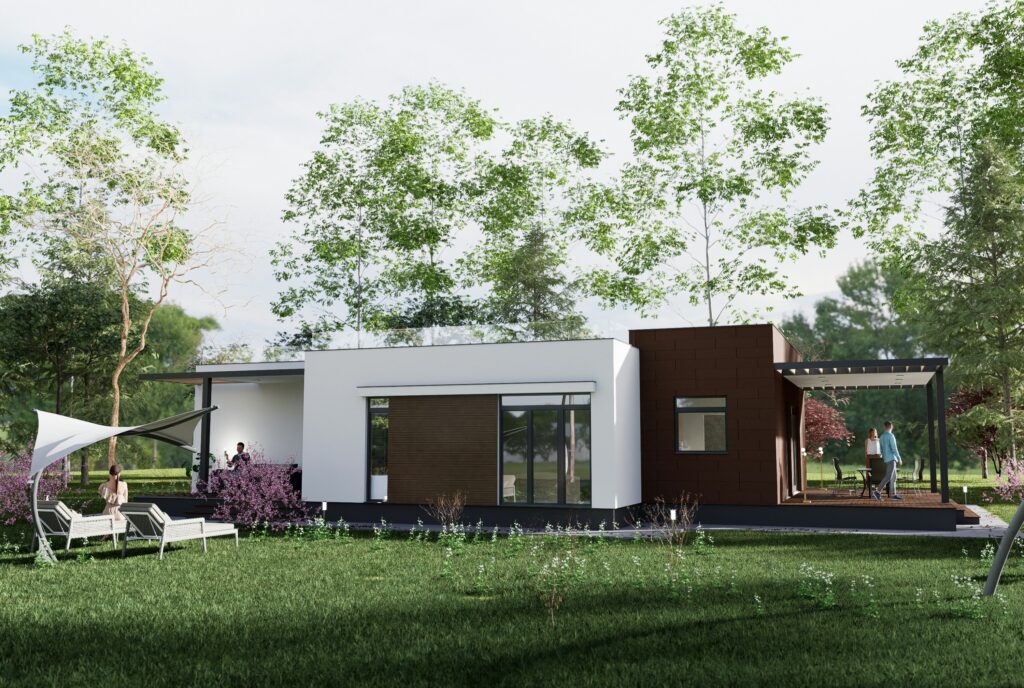
prefab house cost, often misused term. It refers to any home where a significant portion of construction happens in a factory rather than on the building site. Understanding which type of prefab home you’re actually pricing out is the single most important step before you request a quote, because the four main categories differ enormously in cost, financing, and long-term value
Modular Homes
Built in large, room-sized sections (modules) inside a factory, then trucked to your lot and craned onto a permanent foundation. Modular homes are built to the same local and state building codes as traditional site-built houses, which means they appreciate in value similarly and qualify for conventional mortgages.
Manufactured Homes (HUD-Code)
Built entirely in a factory on a permanent steel chassis, then transported as a complete unit. These follow federal HUD construction standards rather than local building codes. They are the most affordable prefab option upfront, but they typically depreciate like vehicles unless the land is owned outright and the home is permanently affixed, and financing often relies on chattel loans with higher interest rates.
Panelized Homes
The factory builds flat wall, floor, and roof panels — framed and sometimes pre-insulated and sided — which are shipped to the site and assembled by a construction crew. This sits between modular and traditional stick-built in terms of site labor required.
Kit Homes (Prefab Kits)
The manufacturer ships a complete package of pre-cut materials and components for a contractor or ambitious DIYer to assemble on-site. Kit homes offer the most hands-on control over labor costs but require the most owner involvement.
Average Prefab House Cost by Type (2026)
| Prefab Type | Base Factory Price (per sq ft) | Fully Installed Cost (per sq ft) | Notes |
| Manufactured (HUD-code) | $40–$70 | $50–$100 | Fastest, cheapest; limited financing; depreciates like a vehicle in most case |
| Standard Modular | $50–$100 | $80–$175 | Most popular option; appreciates like site-built homes |
| Custom/Luxury Modular | $100–$150 | $150–$250+ | High-end finishes, custom architecture |
| Panelized | $40–$90 | $90–$180 | More on-site labor than modular |
| Kit Home | $30–$150 | $90–$200 | Highly variable; DIY assembly can lower total cost |
The gap between the “base factory price” and the “fully installed cost” is the number one source of budget shock for prefab buyers. The factory quote usually covers only 50% to 70% of what you’ll actually spend once land preparation, foundation, delivery, crane-set, utility hookups, permits, and finish work are added
Prefab House Cost by Square Footage
Using the national average of $80–$175 per square foot fully installed for a standard modular home, here’s what different home sizes cost in practice:
| Home Size | Estimated Installed Cost |
| 600–800 sq ft (tiny/ADU) | $50,000–$140,000 |
| 1,000 sq ft | $80,000–$175,000 |
| 1,200 sq ft | $96,000–$210,000 |
| 1,500 sq ft | $120,000–$260,000 |
| 2,000 sq ft | $160,000–$350,000 |
| 2,500 sq ft | $200,000–$438,000 |
For comparison, a traditional site-built (stick-built) home currently averages roughly $150–$300 per square foot, meaning prefab construction typically costs 10% to 20% less than an equivalent stick-built home of the same size and finish level.
What’s Included in the Factory Price — And What’s Extra
Homeowners consistently underestimate total cost because “prefab home price” ads almost always refer to the base module only. Here is a full breakdown of the additional line items you should budget for on top of the factory quote.

Site Preparation
$4,000–$11,000. Covers clearing, grading, and preparing the lot so it’s ready for a foundation. Costs rise significantly on sloped, wooded, or rocky lots.
Foundation
$6,000–$30,000+ (roughly $7–$30 per sq ft). A concrete slab is the least expensive option. A crawlspace costs more, and a full basement is the most expensive, adding $20,000–$30,000 or more depending on excavation needs and soil conditions.
Delivery and Crane-Set
$5,000–$35,000 total, or roughly $5–$35 per sq ft. This covers transporting the modules or panels from the factory, plus the crane and crew needed to set them onto the foundation. Distance from the factory to your site is the biggest cost driver here — the farther the haul, the higher the transportation fee.
Utility Connections
$2,500–$25,000. Water, sewer/septic, and electrical hookups. If your lot already has utilities at the road, this cost drops significantly. Rural lots requiring a well and septic system sit at the high end.
Permits and Fees
$500–$10,000. Varies enormously by municipality. Some states and counties offer streamlined permitting for modular construction because it uses standard local building codes.
“Button-Up” and Finish Work
$10,000–$50,000+. This is the on-site labor to join modules together, finish seams, complete interior trim, and connect systems between sections — work that can’t be done in the factory.
Sales Tax
Roughly $5,000–$10,000, depending on your state and whether the home is classified as real property or personal property at the time of sale.
Rule of thumb: Budget using the 60/40 split — roughly 60% of total project cost goes to the factory-built module, and 40% goes to everything required to get it livable on your lan
Prefab House Cost by Region
Location affects prefab pricing just as much as it affects stick-built construction, driven by labor rates, permitting complexity, and distance from manufacturing facilities.
| Region | Relative Cost | Typical Range (per sq ft, installed) |
| Midwest | Lowest | $80–$140 |
| South (Texas, North Carolina, etc | Low–Moderate | $110–$172 |
| Northeast | High | $130–$220 |
| West Coast (California) | Highest | $160–$240 |
Homes in California and the Northeast can run 25% to 40% more than an identical floor plan built in the Midwest or South, primarily due to higher labor costs, stricter permitting requirements, and longer transportation distances from factories.
Prefab vs. Stick-Built: Which Costs Less?
| Factor | Prefab (Modular) | Stick-Built |
| Cost per sq ft | $80–$175 (installed) | $150–$300 |
| Build timeline | 7–9 weeks factory + 4–8 weeks site work | 6–9 months or more |
| Weather delays | Minimal (built indoors) | Common |
| Material waste | Lower (factory efficiency) | Higher |
| Financing | Conventional, FHA, VA, USDA (modular) | Conventional, FHA, VA, USDA |
| Appreciation | Similar to site-built (modular only) | only)Standard market appreciation |
| Customization | Moderate to high | Highest |
Modular construction generally costs 10% to 20% less than a comparable stick-built home, largely because factory conditions reduce labor hours, material waste, and weather-related delays. Manufactured (HUD-code) homes cost even less upfront but come with financing and depreciation tradeoffs that can offset the initial savings over time.
Financing a Prefab Home
How you finance a prefab home depends heavily on which type you choose:
- Modular homes are treated as real property once permanently affixed to a foundation on owned land, making them eligible for conventional mortgages, FHA loans, VA loans, and USDA loans — the same financing available for stick-built homes.
- Manufactured homes are often financed with chattel loans (a loan on the home itself, not the land), which typically carry interest rates 2 to 4 percentage points higher than a conventional mortgage. On a $120,000 home, that difference can add tens of thousands of dollars in interest over the life of the loan compared to a modular home financed conventionally.
- Kit and panelized homes financing depends on whether you’re using a construction loan that converts to a permanent mortgage, since a portion of the work happens after delivery.
Before comparing financing offers, model your full monthly payment — including taxes, insurance, HOA dues, and PMI if applicable — rather than comparing sticker prices alone.
What Drives Prefab House Cost Up or Down?
Square footage — larger homes require more modules, larger foundations, and more transportation and crane work. Level of customization — standard, pre-designed floor plans are the cheapest; fully custom architecture with unique rooflines or layouts costs significantly more. Finish quality — laminate counters and builder-grade appliances sit at the low end; quartz countertops, hardwood floors, and smart-home features can add $50–$150 per square foot. Foundation type — a slab is cheapest; a full basement is the most expensive option. Site conditions — sloped lots, poor soil, or lack of existing utility access can add tens of thousands of dollars. Distance from the factory — transportation costs rise with mileage, so your region’s proximity to modular manufacturers matters. Number of stories — multi-story modular designs require additional structural engineering and assembly complexity. Local labor market — states with higher construction wages and stricter permitting timelines push overall costs up.
How to Reduce Prefab House Costs
Choose a standard floor plan instead of a fully custom design — pre-engineered layouts avoid costly architectural fees and engineering revisions. Get a true turnkey quote up front. Ask every builder for a complete price that includes site work, foundation, delivery, and finishing — not just the factory module price — so you can make an accurate apples-to-apples comparison. Choose a slab foundation where soil and climate conditions allow, since it’s the least expensive foundation type. Confirm utility access before you buy land. A lot with existing water, sewer, and electrical connections can save $10,000 or more compared to a rural lot needing a well and septic system. Limit customization to what matters most. Structural changes (moving walls, adding stories) cost far more than cosmetic upgrades (paint, fixtures) added after move-in. Compare modular to manufactured carefully. If you plan to finance the purchase, the lower interest rate on a modular home’s conventional mortgage can outweigh the manufactured home’s lower sticker price over the life of the loan. Build in a 10% contingency. Even well-planned prefab projects run into site-specific surprises like unexpected soil conditions or permitting delays
Frequently Asked Questions
How much does a prefab house cost on average in the U.S.?
A prefab house costs $80 to $175 per square foot fully installed on average in 2026, or roughly $120,000 to $260,000 for a 1,500-square-foot home, depending on type, region, and finish level.
Is a prefab house cheaper than building a traditional house?
Yes. Modular homes typically cost 10% to 20% less than an equivalent stick-built home because factory construction reduces labor hours, material waste, and weather-related delays.
What is the cheapest type of prefab home?
Manufactured (HUD-code) homes are the least expensive prefab option, starting around $50 to $100 per square foot installed, though they generally depreciate over time and have more limited financing options than modular homes.
Does the advertised prefab home price include everything?
No. Advertised prices almost always reflect only the factory-built module, which typically covers 50% to 70% of the total finished cost. Site preparation, foundation, delivery, utility connections, permits, and finish work are usually additional.
Can you get a mortgage for a prefab home?
Yes, for modular homes. Once permanently affixed to a foundation on owned land, modular homes qualify for conventional, FHA, VA, and USDA mortgages, the same as site-built homes. Manufactured homes more often rely on chattel loans with higher interest rates.
How long does it take to build a prefab home?
Factory construction typically takes 7 to 9 weeks, followed by 4 to 8 weeks of on-site foundation work, delivery, assembly, and finishing — much faster than the 6 to 9 months typical of stick-built construction.
Do prefab homes hold their value?
Modular homes appreciate similarly to stick-built homes because they meet the same local building codes and are classified as real property. Manufactured homes are more likely to depreciate unless the land is owned and the home is permanently affixed.
Key Takeaways
Prefab house cost in the U.S. ranges from $50 to $250 per square foot, with most buyers paying $80–$175 per square foot for a fully installed modular home. The factory price you see advertised is rarely the full story — budget an additional 30% to 50% for site work, foundation, delivery, and utilities. Modular homes offer the best balance of affordability, financing options, and long-term value; manufactured homes are cheaper upfront but come with financing and depreciation tradeoffs. Location can swing your total cost by 25% to 40%, so get quotes specific to your region before finalizing a budget. Always request a complete turnkey quote — not just a base module price — before comparing builders or comparing prefab to stick-built construction
Have a specific square footage or state in mind? Use these ranges as a starting framework, then request itemized, turnkey quotes from at least three local modular or manufactured home builders to see how your actual project compares to national averages.