Quick Answer
Modular home costs in the U.S. typically range from $80 to $175 per square foot for a fully installed home, or $120,000 to $270,000 for an average 1,500–2,000 sq. ft. home. The factory-built modules alone cost $50–$100 per square foot, while site work, foundation, delivery, and utility hookups add another $30–$75 per square foot on top.
If you’re researching how much a modular home costs before you build, this guide breaks down every line item — from the base unit price to hidden site costs — so you can budget with confidence.
What Is a Modular Home?
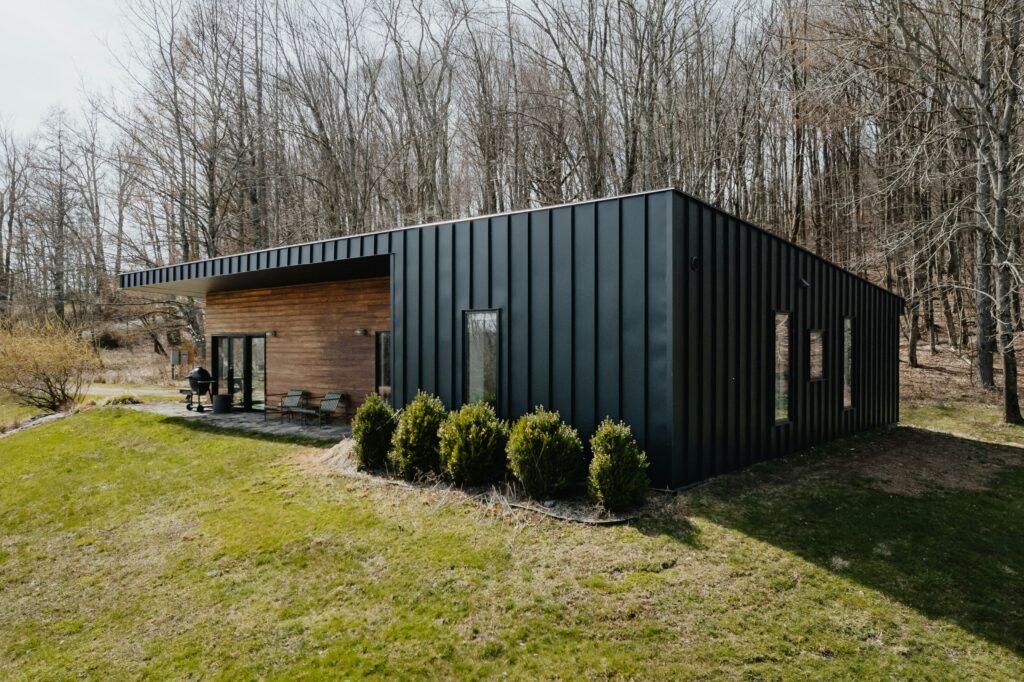
A modular home is a house built in sections, or “modules,” inside a factory, then transported to a home site and assembled on a permanent foundation. Unlike manufactured (mobile) homes, which are built to a single federal HUD code, modular homes are constructed to meet the same state and local building codes as traditional site-built houses. That means a modular home can be financed, insured, and appraised just like a conventional house — and once it’s set on its foundation, there’s often no visible difference between a modular home and one built entirely on-site.
Because most of the construction happens indoors, modular building is faster and more weather-resistant than traditional construction. Factory build times typically run 7 to 9 weeks, which manufacturers say is 30–60% faster than a comparable site-built project.
Modular Home Cost Per Square Foot
The most common way to estimate a modular home’s price is by square footage. Here’s how the numbers break down at each stage of the project:
| Cost Component | Price Per Sq. Ft. |
| Base modules only (factory price, FOB) | $50 – $100 |
| Delivery and crane setting | $5 – $10 |
| Site prep, foundation, and installation | $30 – $60 |
| Total installed (turnkey) cost | $80 – $175 |
| Custom/luxury finishes | $100 – $250+ |
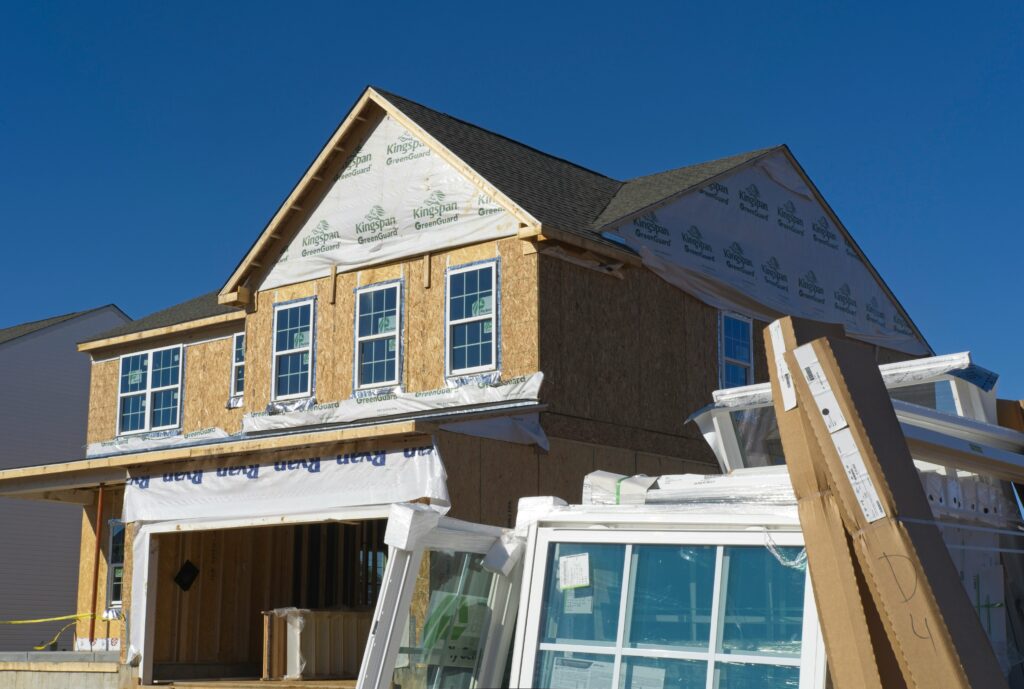
For comparison, traditional stick-built homes run $150–$250+ per square foot installed, meaning modular construction typically saves buyers 10–20% on a comparable home.
A useful rule of thumb in the industry is the 60/40 budgeting rule: roughly 60% of your total project cost covers the factory-built modules, and the remaining 40% covers land preparation, foundation, permits, utility connections, and local labor.
Modular Home Cost by Home Size
Since pricing per square foot isn’t perfectly linear (smaller homes carry higher per-square-foot costs because fixed expenses like permits and utility hookups don’t shrink with the home), it helps to look at real dollar ranges by size.
| Home Size | Base Modules Only | Total Installed Cost |
| 900 sq. ft. | $45,000 – $90,000 | $70,000 – $190,000 |
| 1,200 sq. ft | $60,000 – $120,000 | $96,000 – $210,000 |
| 1,500 sq. ft. | $75,000 – $150,000 | $120,000 – $240,000 |
| 1,800 sq. ft. | $90,000 – $180,000 | $144,000 – $290,000 |
| 2,000 sq. ft. | $100,000 – $200,000 | $160,000 – $350,000 |
| 2,500 sq. ft. | $125,000 – $250,000 | $200,000 – $430,000 |
| 3,000 sq. ft. | $150,000 – $300,000 | $240,000 – $520,000 |
The average modular home in the U.S. is about 1,800 square feet and costs roughly $240,000 total once site work and finishing are included — compared to an average of $323,000 for an equivalent site-built home.
What’s Included in the Base Price
When a manufacturer advertises a “base price,” it typically covers:
- The factory-built structure and framing
- Standard interior finishes (flooring, cabinetry, countertops)
- Basic electrical wiring and plumbing rough-in
- Windows, doors, and roofing materials
- Factory quality inspections
What it usually does not include is land, site preparation, foundation, delivery, utility hookups, permits, or final assembly — which is where a large share of your actual budget goes. This is the single biggest source of confusion (and budget shock) for first-time modular buyers: a “$90,000 modular home” ad is almost always the base module price, not the total move-in-ready cost.
Manufacturers generally quote in one of three ways:
- Factory FOB (Free On Board): Modules only, picked up at the factory gate.
- Delivered and Set: Modules delivered and placed on your foundation by crane.
- Turnkey/Finished: Everything included — foundation, utilities, permits, and final finishing — ready to move in.
Always confirm which category your quote falls into before comparing prices between builders, since two similar-looking quotes can represent very different total costs.
Additional Costs Beyond the Base Price
Land
Land cost is never included in a modular home price and varies enormously by location — from around $20,000 in rural markets to $200,000+ in desirable suburban or coastal areas
Site Preparation
Clearing, grading, and leveling the lot typically costs $4,000 – $11,000 for a standard buildable lot. Sites with rock removal, poor drainage, or slope issues can push this to $20,000+
Foundation
Foundation type has one of the biggest impacts on total cost:
| Foundation Type | Cost Per Sq. Ft |
| Slab | $7 – $15 |
| Crawl space | $10 – $20 |
| Full basement | $18 – $30 |
A basement foundation for a 1,500 sq. ft. home can add $20,000–$30,000 more than a simple slab
Utility Connections
Connecting water, sewer/septic, gas, and electric service can range from $2,500 to $25,000+, depending on how far the site is from existing infrastructure. Well drilling ($3,000–$15,000) and septic system installation ($5,000–$25,000) are common line items on rural lots.
Delivery and Crane Setting
Expect $5 – $10 per square foot, or roughly $3,000 – $20,000 total, depending on distance from the factory and site accessibility.
Permits and Inspections
Building permits, impact fees, and inspections typically run $500 – $5,000, though California and Northeast municipalities can push combined permit costs to $5,000–$12,000.
Customization and Finishes
Upgraded flooring, quartz countertops, custom cabinetry, and smart-home features can add $10 – $150 per square foot on top of the standard finish package.
Sample all-in budget for a 1,800 sq. ft. modular home:
| Line Item | Estimated Cost |
| Base modules | $90,000 – $180,000 |
| Delivery & crane | $9,000 – $18,000 |
| Foundation | $13,000 – $54,000 |
| Site preparation | $4,000 – $11,000 |
| Utility connections | $2,500 – $25,000 |
| Permits & inspections | $500 – $5,000 |
| Estimated Total | $119,000 – $293,000 |
Modular Home Cost by Region
Location affects modular pricing more than almost any other factor, due to labor rates, permitting complexity, and transportation distance from the factory.
| Region | Typical Cost Impact | Notes |
| Northeast | +15% to +25% | Higher labor costs, stricter codes, higher permit fees |
| West Coast (CA especially) | +20% to +40% | Strict energy codes, high land costs, transport distance |
| Midwest | Baseline / lowest | Lower labor and material transport costs |
| South | -5% to -15% | Lower land, permit, and labor costs; slab foundations common |
| Rural areas (any region) | Lower labor, higher delivery | Longer delivery distance and limited crane access can offset lower labor rates |
A 1,500 sq. ft. modular home that costs $150,000 turnkey in Ohio might cost $190,000–$210,000 for the identical floor plan in California or the New York metro area, purely due to regional cost differences.
Modular Home Cost by State: Real Market Examples
National averages are useful, but modular pricing shifts noticeably once you look at specific state markets. Here’s how a 1,500–1,800 sq. ft. turnkey modular home typically compares across five representative states:
| State | Typical Total Cost Range | What Drives the Price |
| California | $200,000 – $320,000 | High land costs, strict energy codes (Title 24), union labor |
| New York | $190,000 – $300,000 | High labor costs, dense permitting requirements, transport distance |
| Florida | $140,000 – $230,000 | Hurricane-rated construction adds cost, but land and labor are cheaper |
| Texas | $130,000 – $220,000 | Low land and permit costs, non-union labor market |
| Ohio | $120,000 – $200,000 | Lower labor rates, shorter delivery routes to factories, minimal impact fees |
Coastal and hurricane-prone states like Florida require impact-resistant windows and reinforced roof-to-wall connections, which can add 8–12% to total construction costs even though land and labor are relatively inexpensive. Northern states with deep frost lines, such as Minnesota and Wisconsin, require foundations to extend well below grade, which raises foundation costs regardless of how affordable labor is otherwise.
Modular vs. Manufactured vs. Stick-Built Homes
| Feature | Modular | Manufactured (Mobile) | Stick-Built |
| Cost per sq. ft. (installed) | $80 – $175 | $40 – $80 | $150 – $250+ |
| Building code | Local/state code | Federal HUD code | Local/state code |
| Foundation | Permanent | Can be permanent or temporar | Permanent |
| Financing | Conventional, FHA, VA, USDA | Chattel loans common; harder to get conventional mortgage | Conventional, FHA, VA, USDA |
| Appreciation | Similar to site-built | Typically depreciates like a vehicle | Appreciates with local marke |
| Build timeline | 3–6 months total | 1–3 months total | 6–14 months total |
| Customization | Moderate to high | Low | Highest |
The key distinction buyers should understand: modular homes are permanent real property built to local code, while manufactured homes are regulated like vehicles under federal code and financed differently. This is also why modular homes tend to hold and appreciate in value more like traditional houses.
Cost by Home Style
| Style | Typical Cost Range |
| Ranch (single-story) | $80 – $160/sq. ft. |
| Cape Cod | $90 – $170/sq. ft. |
| Two-story / Colonial | $85 – $165/sq. ft. |
| Duplex | $100 – $200/sq. ft. |
| Log-style modular | $50 – $100/sq. ft. (base kit) |
| Custom / luxury modular | $100 – $250+/sq. ft |
| Tiny modular home | $100 – $200/sq. ft. (higher per-sq.-ft. due to fixed costs) |
Two-story designs are often slightly more cost-efficient per square foot than single-story homes of the same total size, since the foundation and roof — two of the most expensive components — are shared across more living space.
Factors That Affect Modular Home Cost
Several variables can move your final number up or down significantly:
- Home size and layout — More square footage and complex floor plans increase both factory and site costs.
- Number of modules — Homes requiring more sections need more crane time and assembly labor.
- Finish level — Standard laminate and basic appliances keep costs low; quartz counters, hardwood floors, and smart-home wiring can add $50–$150 per square foot.
- Foundation type — Basements cost significantly more than slabs.
- Site conditions — Sloped lots, poor soil, or sites requiring retaining walls add engineering and labor costs.
- Distance from the factory — Longer delivery routes mean higher transportation fees, and very long hauls may require oversized-load permits.
- Local labor market — Union labor markets (common in the Northeast and West Coast) cost more than right-to-work states.
- Climate and building code requirements — Hurricane-rated construction in Florida or frost-line foundation depth requirements in the northern Midwest both add cost.
- Land access — Tight urban lots or backyard-only access can limit crane placement and add cost, or in extreme cases, rule out modular construction entirely.
Financing a Modular Home
Because modular homes are classified as real property once permanently affixed to a foundation, they qualify for the same financing options as traditional homes:
- Conventional mortgages (typically 10–20% down)
- FHA loans for qualified buyers with lower down payment requirements
- VA loans for eligible veterans and service members
- USDA loans for eligible rural properties
- Construction-to-permanent loans, which convert to a standard mortgage once the home is complete
Lender familiarity with modular financing has improved substantially in recent years, and most major mortgage lenders now underwrite modular home loans using the same criteria as site-built homes, provided the home is on a permanent foundation.
Ways to Save Money on a Modular Home
Buy a developed lot. Land that already has utility connections, clearing, and grading can save $15,000–$50,000+ compared to raw land. Choose a slab foundation where climate allows — it can save $15,000–$21,000 versus a basement for a 1,000 sq. ft. footprint. Stick to a standard floor plan. Custom shapes and layout changes erase much of modular’s cost advantage. Choose a nearby factory. Shorter delivery distances reduce transportation fees. Confirm crane access early. Site access issues discovered late can cause costly delays. Get foundation and site work quoted separately and in writing before signing a contract, so nothing is bundled ambiguously into a “starting price.” Budget a 10–15% contingency for site surprises like rock removal, drainage work, or utility distance overages.
Pros and Cons of Modular Home Costs
Before committing to a modular build, it helps to weigh where the cost savings genuinely pay off — and where they don’t.
Where modular saves you money:
- Factory production reduces material waste and protects the build from weather delays, both of which drive up costs on traditional job sites.
- Bulk purchasing of materials across many homes lowers per-unit costs for manufacturers, savings that get passed to buyers.
- Faster completion means fewer months of temporary housing, storage, or construction loan interest.
- Predictable factory pricing makes budgeting more accurate than a site-built project, where change orders and weather delays are common cost overruns.
Where costs can catch buyers off guard:
- Site work, permits, and utilities are almost always quoted separately, and buyers who compare only the “base price” between builders often underestimate their real total by 30–40%.
- Difficult sites — steep slopes, rocky soil, or long distances from utility infrastructure — can erase much of modular’s cost advantage.
- Heavy customization narrows the price gap with stick-built construction, since custom engineering work loses some of the factory’s cost efficiency.
- Limited local modular manufacturers in some regions can mean longer delivery distances and higher transportation fees.
Modular Homes and Long-Term Value
Because modular homes are permanently affixed to a foundation and built to the same codes as site-built houses, they typically appreciate at a similar rate to traditional homes in the same market — a meaningful difference from manufactured homes, which are financed and often valued more like vehicles. Modular homes generally have a lifespan of 50 to 75 years, and well-maintained, high-quality builds can last up to 100 years.
Energy efficiency is another factor that affects both upfront cost and long-term value. Factory-sealed construction tends to produce tighter building envelopes than typical site-built framing, which can reduce energy loss around seams and joints. Buyers who select upgraded insulation, high-efficiency HVAC systems, and energy-rated windows pay more upfront — often $5,000–$15,000 more — but can recoup some of that cost through lower utility bills and, in some markets, energy-efficiency rebates or tax incentives.
Some states are also actively encouraging modular construction as part of broader affordable-housing strategies, including reduced permit fees, faster plan-review timelines, and pilot programs aimed at increasing housing supply. It’s worth checking with your local building department, since these incentives can meaningfully offset site and permitting costs depending on where you’re building.
Frequently Asked Questions
How much does a modular home cost on average in 2026?
The average modular home costs around $240,000 installed for a typical 1,800 sq. ft. home, or $80–$175 per square foot depending on location, foundation, and finish level
Is a modular home cheaper than building a traditional house?
Yes. Modular construction typically costs 10–20% less than an equivalent stick-built home, mainly due to faster factory build times, reduced material waste, and less exposure to weather delays.
Does the price of a modular home include land?
No. Land is always a separate cost. The advertised base price covers only the factory-built structure; land, foundation, utilities, permits, and site work are additional.
Can you get a mortgage for a modular home?
Yes. Once a modular home is permanently attached to a foundation, it qualifies for conventional, FHA, VA, and USDA loans, just like a site-built home.
What is the difference between a modular home and a manufactured home?
Modular homes are built to the same state and local building codes as site-built houses and sit on permanent foundations. Manufactured homes are built to a single federal HUD code and are regulated more like vehicles, which affects financing and long-term value.
How long does it take to build a modular home?
Factory construction of the modules typically takes 7–9 weeks. Including site preparation, foundation work, delivery, and final assembly, most modular home projects are move-in ready within 3–6 months — considerably faster than the 6–14 months typical of stick-built construction.
What size modular home is most affordable per square foot?
Larger homes (2,000+ sq. ft.) generally have a lower cost per square foot than smaller homes, since fixed costs like permits, delivery, and utility hookups don’t scale down proportionally with size.
Do modular homes hold their value?
Yes. Because they’re built to local codes and sit on permanent foundations, modular homes appreciate similarly to traditional site-built homes, unlike manufactured homes, which tend to depreciate.
Prices in this guide reflect 2026 U.S. national averages and industry estimates. Actual costs vary by builder, region, lot conditions, and finish selections. For an accurate quote, request itemized pricing from local modular builders that clearly separates base module cost, delivery, foundation, and site work.