Building a house in the mountains is one of the most rewarding — and most misunderstood — construction projects a homeowner can take on. The views, the privacy, and the connection to nature come with a price tag that looks nothing like a suburban new-build quote. If you’ve searched for “mountain house construction cost” and found wildly different numbers on every site, this guide will explain exactly why, and give you real, usable figures for budgeting your project.
Quick Answer
How Much Does a Mountain House Cost to Build?
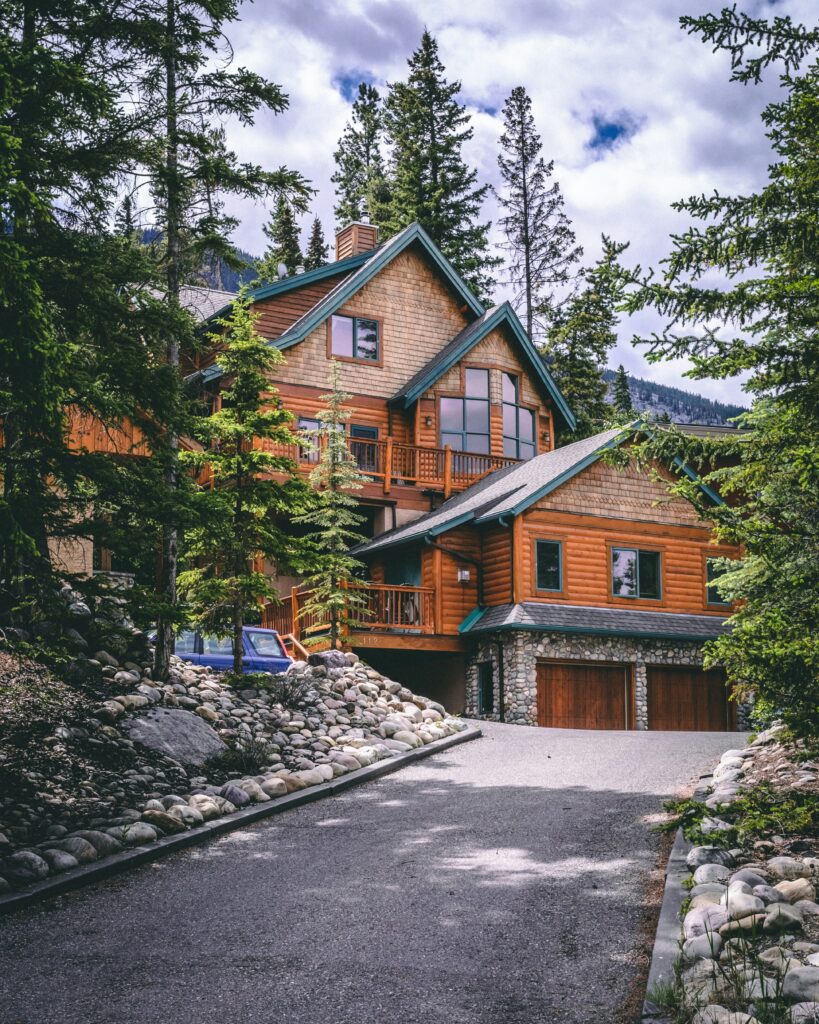
Building a house on mountainous or mountain-adjacent terrain in the United States typically costs $200 to $600+ per square foot, compared to $140–$260 per square foot for a standard flat-lot home in most of the country. A 2,500-square-foot mountain home commonly lands between $500,000 and $1.5 million, and ultra-luxury mountain resort builds in places like Aspen or Vail can exceed $1,000 to $2,200 per square foot.
The wide range exists because mountain construction isn’t really one type of project — it’s several, depending on terrain steepness, elevation, remoteness, and the level of finish. Below, we’ll break every one of those variables down.
Why Mountain Homes Cost So Much More Than Flat-Lot Builds
A standard new home build in the U.S. generally falls between $140 and $500 per square foot, with most conventional builds landing around $170–$260 per square foot before land costs. Mountain construction pushes past that baseline for several structural reasons that have nothing to do with finishes or luxury upgrades:
1. Remote logistics. Materials, equipment, and skilled trade crews often have to be trucked in from distant urban centers, adding freight costs and scheduling delays to nearly every phase of the build.
2. Limited local workforce. Mountain and resort towns frequently have fewer available tradespeople, which drives up labor rates and extends project timelines — a pattern seen consistently in mountain-heavy states like Colorado and Montana.
3. Shorter building seasons. Snow, mud season, and freeze-thaw cycles compress the usable construction calendar, sometimes to just 5–7 months per year at higher elevations, which increases both labor costs and overall project duration.
4. Difficult site conditions. Sloped, rocky, or heavily wooded lots require far more excavation, retaining wall work, and soil correction than a flat suburban parcel.
5. Complex foundations and engineering. Grading, drainage, and structural engineering all become more involved on a slope, adding design and stamped-engineering costs before a single wall goes up.
6. Utility and access extensions. Wells, septic systems, and long driveway or access-road builds are the norm rather than the exception in mountain settings.
Put together, these factors explain why mountain towns in Colorado can see average construction costs run two to three times higher than nearby metro areas, and why homes in premier mountain resort markets can push past $1,000 per square foot for high-end finishes with vaulted ceilings and large glass facades.
Mountain House Construction Cost by Home Type
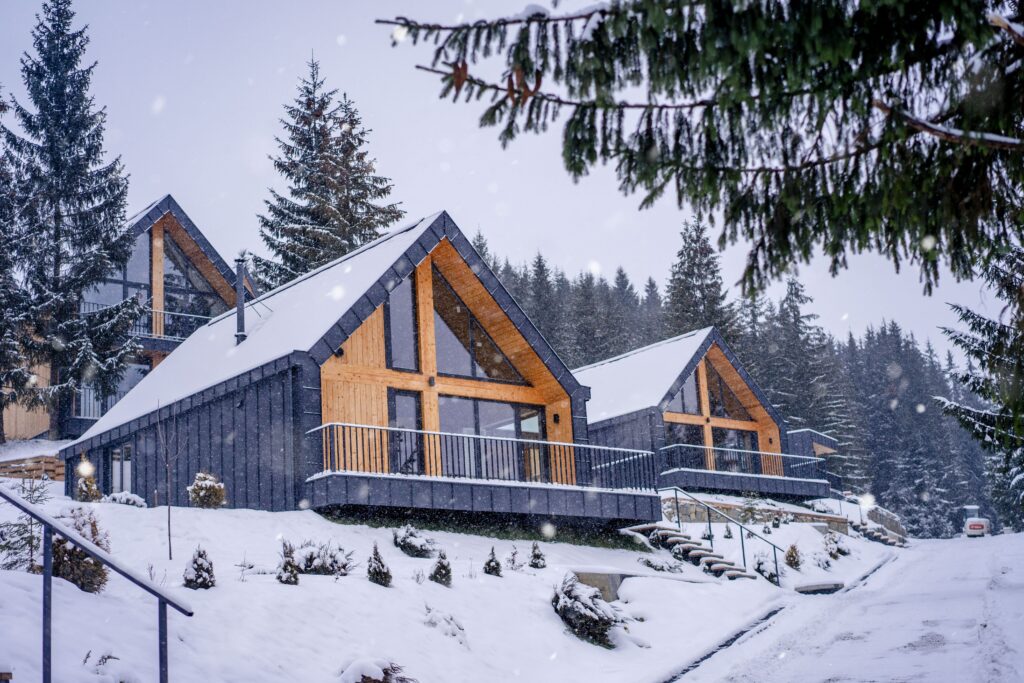
Not every mountain home is a glass-and-steel ski chalet. Here’s how cost per square foot compares across the most common mountain build styles.
Log Cabin / Log Home
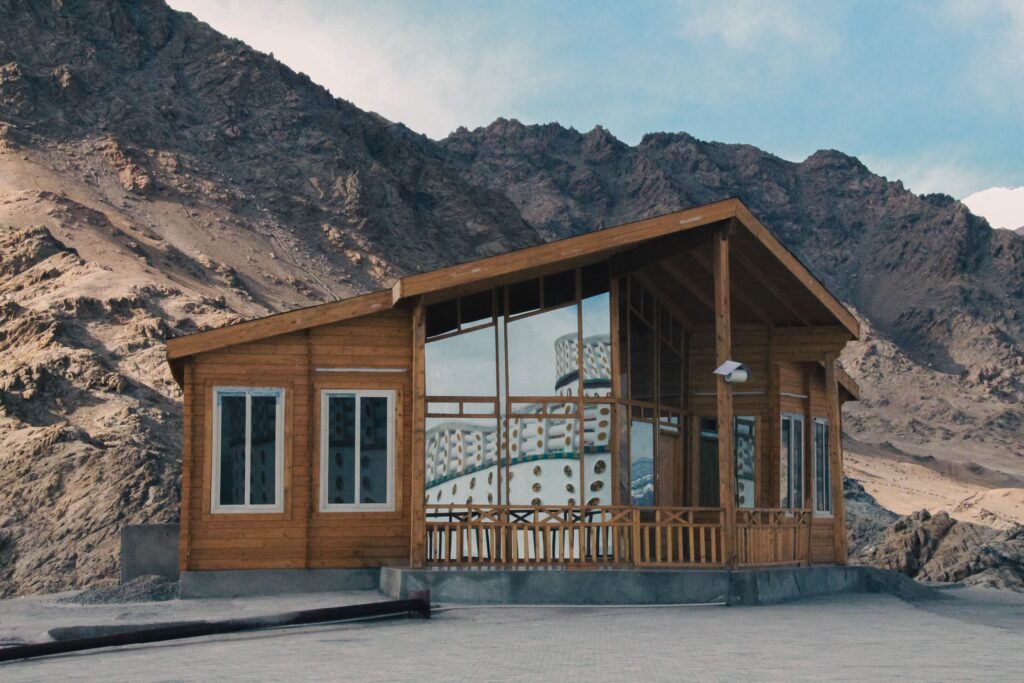
Log cabins carry a similar per-square-foot cost to conventional homes, generally landing around $100 to $200 per square foot for materials and labor combined. Framing alone for a log structure can run $25,000 to $65,000 depending on lumber market conditions, which remain volatile. A small, simple log cabin under 1,000 square feet is one of the most budget-friendly ways to get a genuine mountain aesthetic.
Timber Frame / Rustic Custom Home
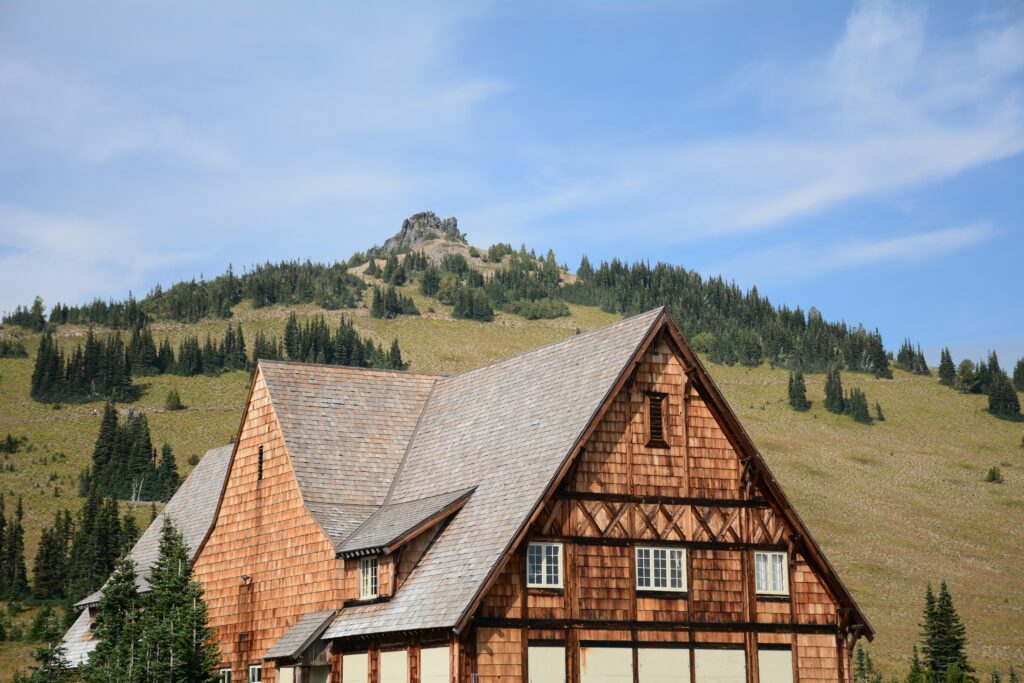
Custom timber-frame and rustic mountain designs — the kind with post-and-beam construction, stone accents, and large windows — typically start around $250 per square foot and climb well past $400–$500 depending on ceiling height, glazing, and roofline complexity.
Modular Mountain Home
Modular construction offers meaningful savings versus a fully custom build, generally running $80 to $175 per square foot for the base structure. Chalet-style modular homes — designed specifically with vaulted ceilings and large window walls for mountain views — are a small but growing niche in this space. The catch is that roughly 40% of your total modular budget still goes toward land preparation, foundation work, permits, and utility connections, which are the same expensive line items that affect any mountain build.
High-End Custom Mountain Home
In premier mountain resort markets, luxury custom homes with high-end materials, vaulted ceilings, and expansive glass can exceed $1,000 per square foot, with some ultra-luxury builds reaching $2,200 per square foot
Regional Cost Comparison
Mountain construction costs vary significantly by state and even by specific mountain community. Here’s a snapshot of 2026 pricing across major mountain regions:
| Region | Cost per Sq. Ft. | Notes |
| Colorado (general/mountain terrain) | $200–$500 | Statewide average; mountain lots push toward the top |
| Colorado mountain resort towns (Vail, Aspen, Breckenridge) | $600–$2,200+ | Two to three times the metro average |
| Montana (Gallatin Valley / Bozeman area) | $250–$400 | Varies with lot conditions and excavation needs |
| North Carolina mountains (western NC) | $200–$300+ | Higher than the state’s $135–$200 flatland average |
| National mountain-adjacent average | $180–$320 | Baseline before factoring in extreme terrain or remoteness |
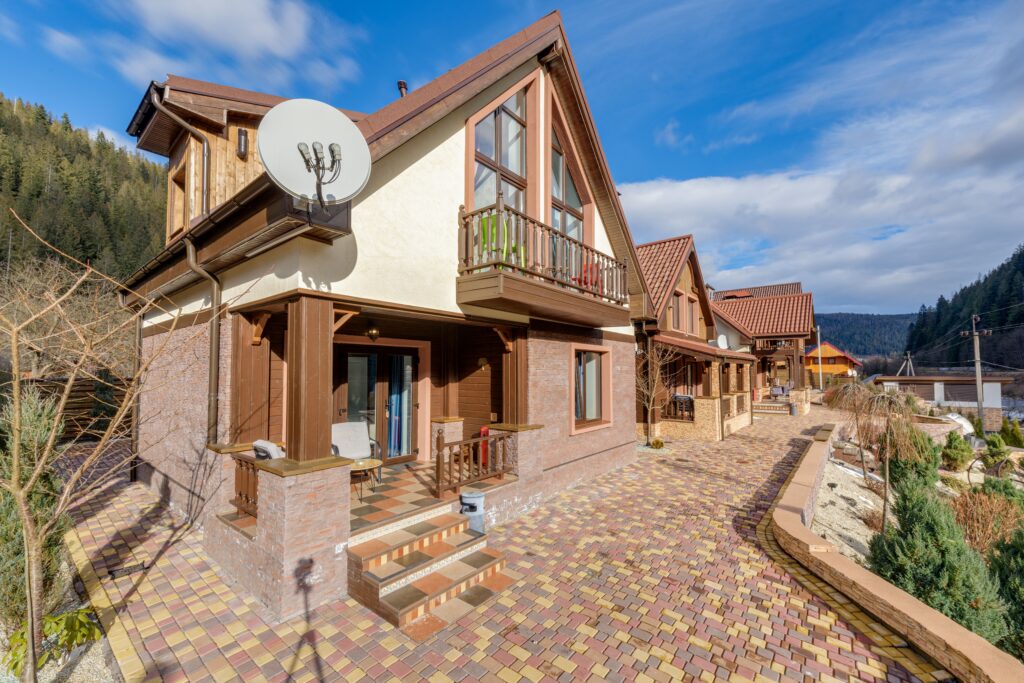
Two homes with identical floor plans can carry a $200-per-square-foot cost difference simply because one sits on a gentle mountain-view slope and the other sits on a steep, forested, rock-heavy lot with no existing road access.
The Five Cost Categories of a Mountain Build
Every mountain construction budget breaks down into five major categories. Understanding each one helps you spot where your money is actually going — and where it can be trimmed.
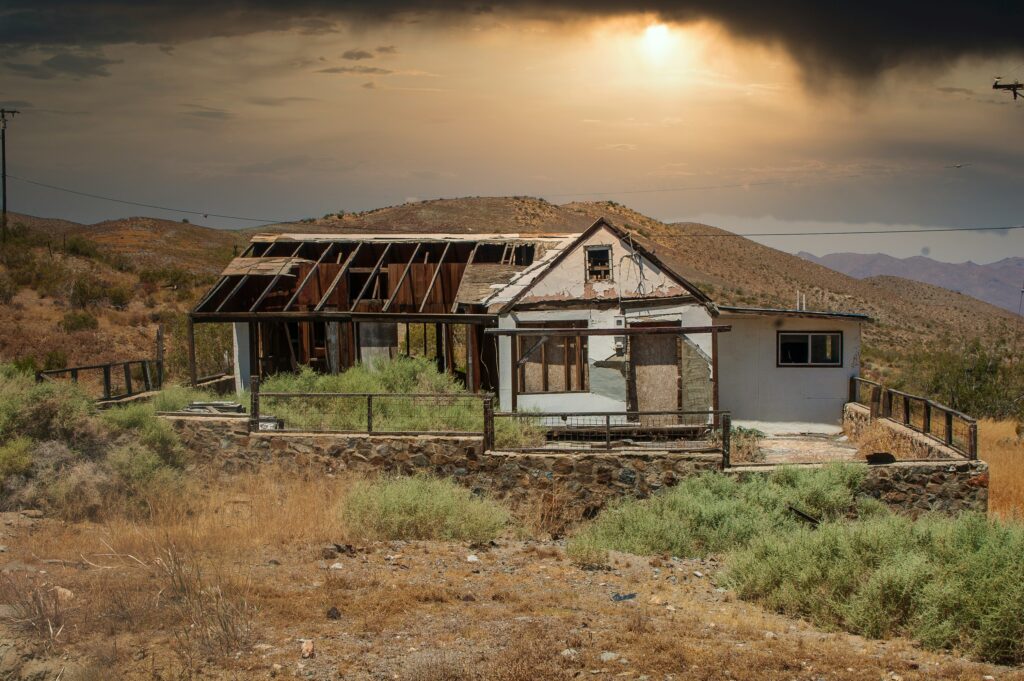
Design & Engineering
Mountain lots almost always require structural and geotechnical engineering beyond a standard flat-lot build, since slope stability, snow-load calculations, and drainage all need to be professionally assessed. Design and engineering fees commonly fall in the range of $2 to $4 per square foot combined, plus a separate geotechnical engineering fee of $1,500 to $8,000 depending on site complexity. Architectural design fees more broadly can add 5–15% of the total construction cost on custom projects.
Land Development & Site Work
This is where mountain builds diverge most sharply from flatland construction. Clearing trees, blasting or removing rock, grading a stable building pad, and controlling stormwater runoff on a slope can add tens of thousands of dollars before the foundation is even poured. A remote, sloped, or heavily wooded parcel is dramatically more expensive to prepare than a flat lot with existing street access.
Access Roads & Driveways
Many mountain properties don’t have direct road frontage, meaning you may need to cut and grade a private access road before construction equipment can even reach the site. Costs vary enormously based on length, grade, and whether rock removal is needed, but a paved driveway alone averages around $7,500, while a gravel driveway runs closer to $1,700 — and that’s before accounting for hundreds of additional feet of mountain access road.
Utilities
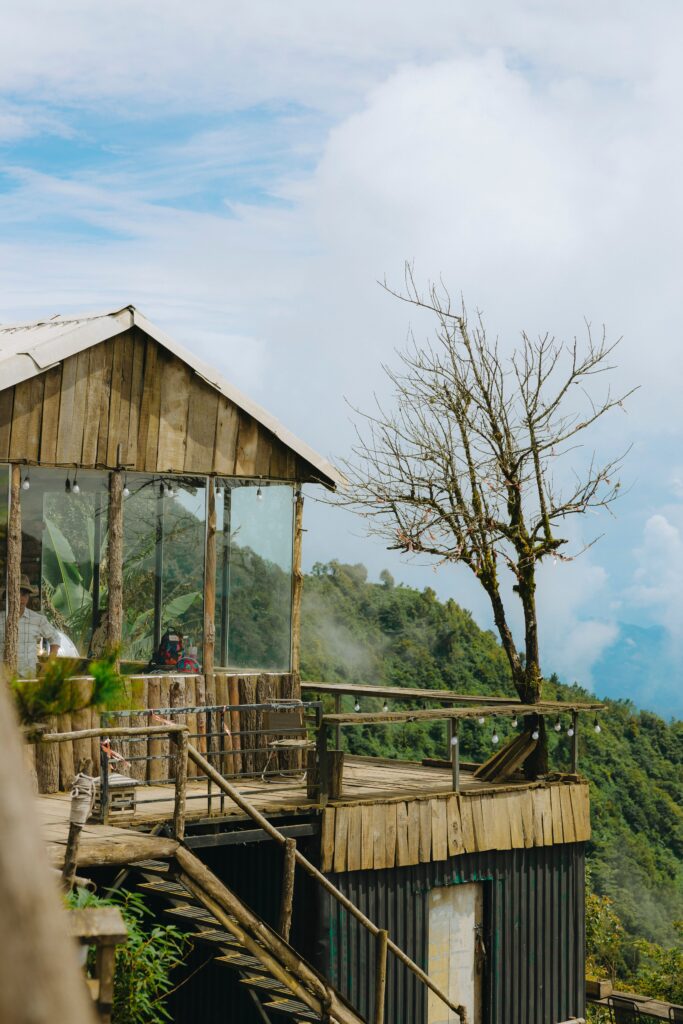
Off-grid or semi-remote mountain lots frequently require:
- A drilled well (in place of municipal water)
- A septic system (in place of sewer connection)
- Extended electrical line runs, or a solar/battery off-grid system
- Propane service for heating in areas without natural gas lines
Builders in mountain markets routinely field questions about whether a property will connect to community water and sewer or require well and septic systems, since the answer significantly changes both timeline and cost.
Excavation & Foundation
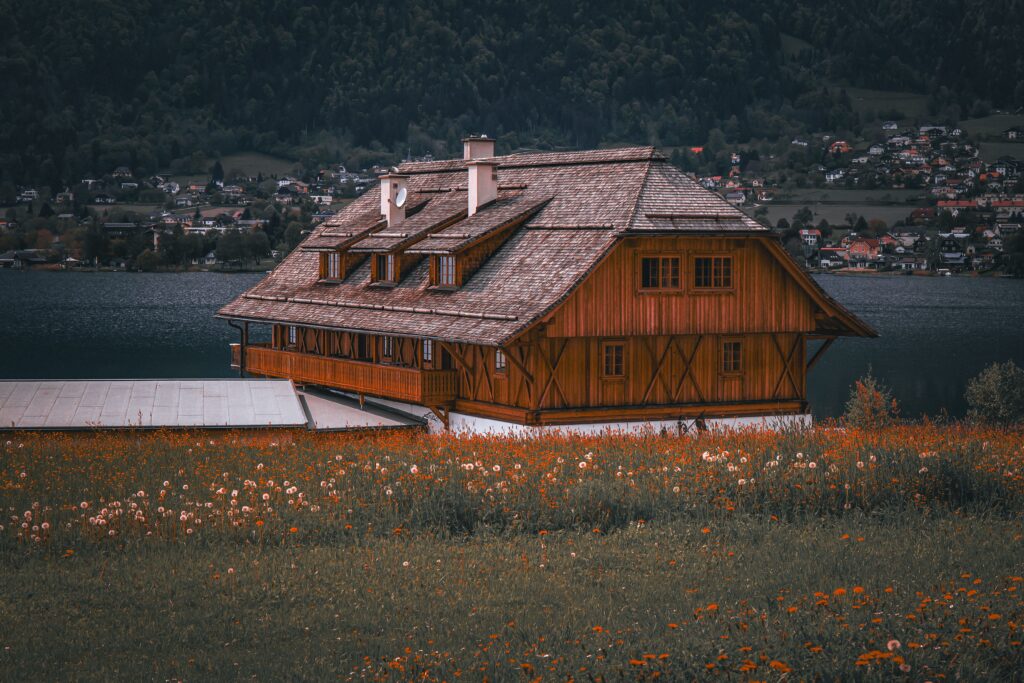
Foundation type and cost depend heavily on slope:
- Slab-on-grade: Least expensive, but only feasible on relatively flat pads
- Crawlspace: Common on gently sloped lots; moderate cost
- Full basement / walkout basement: Popular in mountain designs to take advantage of views, but requires significantly more excavation
- Pier and post / pile foundations: Used on steep or unstable slopes; can be the most expensive option due to engineering and specialized equipment
Hidden and Soft Costs Buyers Often Miss
eyond the visible construction number, mountain builds carry soft costs that can add another 20–30% on top of the hard construction total:
- Permits & inspection fees: $1,500–$5,000+, sometimes higher in resort municipalities with additional review requirements
- Construction loan interest: With 2026 construction loan rates running roughly 10.5–11.5% APR in some markets, carrying costs on a slow mountain build can easily add $15,000–$22,000 in interest before move-in
- Builder’s risk & liability insurance: $2,000–$6,000
- Extended construction timeline costs: Shorter mountain building seasons often stretch an 8-month project into 12–14 months, increasing financing carry costs and off-site living expenses
- Wildfire mitigation requirements: Many mountain jurisdictions now require defensible space clearing, fire-resistant roofing and siding, and ember-resistant vent screens, all of which add to material costs
- Snow load structural requirements: Roof framing sized for heavy snow accumulation costs more in both materials and engineering than a standard roof
Sample Budget: 2,500 Sq. Ft. Mountain Home
While every lot is different, here’s a realistic mid-range framework for a 2,500-square-foot custom mountain home:
| Category | Estimated Cost |
| Design & engineering | $8,000–$15,000 |
| Land clearing, grading & site work | $30,000–$90,000 |
| Access road / driveway | $10,000–$60,000+ |
| Well & septic system | $20,000–$45,000 |
| Foundation & excavation | $40,000–$100,000 |
| Core construction (framing through finishes) | $500,000–$900,000 |
| Permits, insurance & soft costs | $25,000–$60,000 |
| Estimated Total | $630,000–$1,270,000 |
This range assumes a mid-to-upper finish level. Ultra-luxury finishes, extreme slope conditions, or fully off-grid systems can push the total well beyond $1.5 million.
How to Reduce Mountain House Construction Costs
You can’t eliminate the terrain, but you can control how much it costs you:
- Choose your lot carefully. A gently sloped, partially cleared lot with existing road access can save tens of thousands compared to a steep, heavily forested, landlocked parcel.
- Simplify the roofline and footprint. A compact rectangular design with fewer corners and a straightforward roofline reduces both labor and material waste — savings of 15–25% are realistic on framing and roofing alone.
- Build up, not out. A two-story design reduces the foundation and roof footprint relative to total square footage, which matters even more on expensive mountain foundations.
- Consider modular or panelized construction. Factory-built components can reduce on-site labor time, which is valuable when local mountain-area labor is scarce and expensive.
- Time your build strategically. Starting site work and foundation pours early in the building season avoids costly weather delays that eat into your usable construction months.
- Get a true line-item bid. Because mountain builds have so many variable site-work costs, insist on a transparent, itemized proposal with realistic allowances rather than a single flat per-square-foot number — this is the single best protection against costly change orders later.
- Budget a real contingency. Plan for a 10–15% contingency on top of your estimated total. Mountain sites reveal surprises — bedrock, unexpected drainage issues, access complications — more often than flat suburban lots.
Frequently Asked Questions
How much does it cost to build a house on a mountain?
Most mountain home builds in the U.S. cost between $200 and $600 per square foot, with luxury resort-area builds exceeding $1,000 per square foot. A typical 2,500-square-foot mountain home costs roughly $630,000 to $1.3 million all-in, including site work, utilities, and soft costs.
Why is building on a mountain more expensive than building on flat land?
Mountain construction costs more due to remote material and labor logistics, limited local skilled trade availability, shorter building seasons caused by snow and weather, more complex grading and drainage engineering, and the need for extended utility and access road infrastructure.
Is a log cabin cheaper than a custom mountain home?
Yes. Log cabins generally cost $100–$200 per square foot, which is on the lower end of mountain construction pricing, while fully custom timber-frame or luxury mountain homes often start around $250 per square foot and climb significantly higher.
Do mountain homes need special foundations?
Often, yes. Sloped and unstable mountain lots frequently require pier, post, or pile foundations, or a walkout basement design, rather than the simple slab foundations common in flatland construction. Foundation choice depends on slope grade, soil composition, and local building codes.
How long does it take to build a mountain house?
Mountain builds typically take longer than flatland construction — often 10 to 18 months — due to shorter usable building seasons, weather-related delays, and more complex permitting and site work.
Can you build off-grid in the mountains?
Yes. Many mountain properties rely on well water, septic systems, and solar or generator-based power instead of municipal utilities. Off-grid systems add upfront cost but eliminate ongoing utility connection fees and are common in remote mountain locations.
What adds the most unexpected cost to a mountain build?
Site work is the most common source of budget overruns — clearing, grading, rock removal, drainage control, and access road construction can add tens of thousands of dollars that a simple per-square-foot quote often doesn’t reflect.
Final Thoughts
Mountain house construction isn’t a single price point — it’s a range shaped by slope, remoteness, climate, and the quality of finishes you choose. The national averages that apply to a suburban subdivision simply don’t hold up once you introduce steep terrain, seasonal weather windows, and off-grid utility needs. The best protection against budget surprises is a detailed site evaluation before you finalize plans, a transparent line-item bid from your builder, and a realistic contingency fund built into your financing from day one.
If you’re planning a mountain build, get a geotechnical and site assessment early — it’s the single factor that will most accurately tell you which end of the cost range your specific project will land in.